

How Summer Rains Cause Water Issues and How Cram Concrete Repairs Basements and Foundations

A hard summer rain can reveal problems that stayed hidden all spring. One day the basement looks dry. The next, there is a damp line along the wall, a musty smell near the floor, or water collecting where the wall meets the slab.
In Southern Minnesota, summer storms can come fast and heavy. When the ground is already wet, that water needs somewhere to go. If drainage is poor, concrete is cracked, or a foundation has weakened over time, the pressure often shows up in the basement.
That does not always mean the home has a major structural problem. It does mean the water is giving a warning. Cram Concrete helps homeowners address those warnings with concrete repairs, basement work, and foundation solutions built for real weather and real homes.

Why summer rain creates basement and foundation problems
Summer rain is different from a light spring shower. A strong storm can drop a lot of water in a short amount of time. The soil around a home may not absorb it quickly enough, especially if the ground is compacted or already saturated.
When that happens, water builds up against basement walls and footings. This creates hydrostatic pressure, which is the force of water pushing against concrete. Concrete is strong, but it is not magic. If there are cracks, gaps, weak joints, or settlement issues, water will find them.
Common summer rain problems include:
Water near the basement wall and floor joint
Damp or stained concrete walls
Hairline cracks that begin to leak
Musty smells after storms
Efflorescence, which looks like white powder on concrete
Bowing, shifting, or uneven foundation walls
Settled exterior concrete that drains toward the house
Some of these signs seem small at first. That is why they are easy to ignore. The trouble is that water problems rarely fix themselves. Each storm can add more pressure, widen small cracks, and move more soil around the foundation.
Southern Minnesota homes also deal with freeze and thaw cycles. Cracks that form during winter can become water entry points during summer. A basement that stayed dry for years may start leaking after one wet season because the concrete, soil, and drainage conditions have changed.
How water finds its way into concrete basements
Water does not need a large opening to create a problem. It can move through tiny cracks, porous spots, construction joints, and gaps around pipes. Once a path opens, repeated storms can make it worse.
The most common entry points are easy to understand once you know where to look.
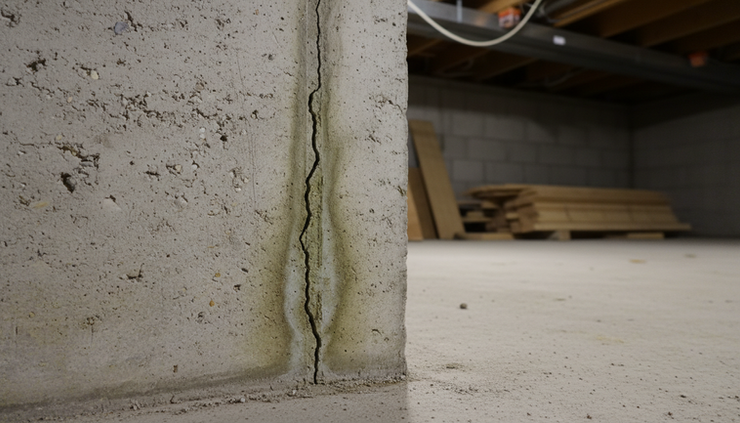
Cracks in basement walls
Wall cracks may run vertically, diagonally, or horizontally. Some are caused by normal shrinkage as concrete cures. Others point to pressure from soil movement or foundation stress.
A small crack may only weep during heavy rain. Over time, that same crack can let in more water, stain the wall, or allow dampness into finished basement materials.
The wall and floor joint
Many basements leak where the vertical wall meets the concrete floor. This joint is a natural weak point because the wall and slab are separate pours. When groundwater rises under or around the foundation, it may push through this seam.
If water appears along the perimeter after storms, the joint may be part of the issue.
Honeycombing or porous concrete
Concrete should be dense and well consolidated. If it has voids, rough pockets, or porous areas, water can move through more easily. This can happen because of age, original placement conditions, or deterioration.
A repair plan may include patching, resurfacing, or replacing damaged concrete depending on the condition.
Gaps around utility penetrations
Pipes, sleeves, and other penetrations through basement walls need a tight seal. If the seal fails, rainwater can enter around the opening. These leaks can be tricky because the water may show up away from the actual source.
Exterior concrete that slopes the wrong way
Sidewalks, patios, stoops, and driveways should help move water away from the home. When slabs settle or crack, they may direct rainwater toward the foundation instead.
This is one reason concrete repair outside the home can be just as important as basement repair inside the home.
The warning signs that should not be brushed aside
Some basement water problems are obvious. Standing water is hard to miss. Other signs are quiet at first. They may show up only after a storm, then disappear once the basement dries out.
Watch for these clues after summer rain:
Dark spots on concrete
Areas that stay damp longer than the rest of the wall or floor can point to water movement.
White powdery residue
Efflorescence forms when water carries minerals through concrete and leaves them behind.
Peeling paint or bubbling wall coverings
Moisture behind a surface often causes finishes to fail.
Rust on metal supports or fasteners
Basement moisture can affect more than concrete.
A musty smell
Odor can signal damp materials, even when visible water is not present.
New or widening cracks
Changes in crack width, length, or pattern deserve attention.
Doors or windows that stick
In some cases, foundation movement can affect framing above.
A single damp spot does not always mean a foundation is failing. Still, it should be checked. The goal is to learn whether the issue is a surface repair, a drainage problem, a structural concern, or a mix of several factors.
The earlier the source gets identified, the more repair options are usually available.
Why quick patching is not always enough
It is tempting to seal a visible crack and call the job done. Sometimes crack sealing is part of the right repair. But if water pressure, soil movement, or failing exterior concrete keeps feeding the problem, a surface patch may not last.
A good repair starts with diagnosis. The visible leak is only one symptom. The bigger question is why water reached that spot in the first place.
That may involve looking at:
Roof runoff and downspout discharge
Soil grade around the foundation
Exterior concrete slope
Crack type and direction
Wall movement or bowing
Interior water patterns
Basement finishing materials
Age and condition of the concrete
Cram Concrete can help sort out whether the home needs targeted concrete repair, basement wall repair, foundation work, or related exterior concrete improvements. That matters because a basement water issue may start outside, inside, below the slab, or at the wall itself.
A repair that matches the cause will usually perform better than one that only hides the symptom.
How Cram Concrete approaches basement and foundation repair
Concrete repair is not one-size-fits-all. A newer home with a small shrinkage crack needs a different plan than an older home with wall movement, settled steps, and poor drainage near the foundation.
Cram Concrete works with Southern Minnesota homeowners to evaluate the condition of the concrete and choose a practical repair path. The work may include basement and foundation repairs, concrete replacement, crack repair, or rebuilding damaged concrete areas.
The process often starts with a careful look at where the water appears and what the surrounding concrete is doing.
Inspect the source of the water issue
The first step is to find the likely water path. That means looking beyond the wet spot. A basement leak may connect to a crack, a joint, a settled patio, a grading issue, or an area where water collects near the exterior wall.
A clear inspection helps separate cosmetic concrete damage from problems that need deeper repair.
Repair damaged concrete before it spreads
Concrete cracks and spalling can worsen when water enters and temperatures change. Repairing damaged areas helps protect the structure and can reduce the chance of more water intrusion.
Depending on the situation, Cram Concrete may repair cracks, patch deteriorated sections, replace failed concrete, or recommend foundation-specific work.
Improve how water moves around the foundation
Concrete around the home should guide water away, not trap it near the basement wall. If an exterior slab has settled toward the home, it can send gallons of rainwater to the foundation during a storm.
Repairing or replacing problem concrete can make a major difference. Walkways, stoops, aprons, patios, and driveway areas all play a role in drainage.
Stabilize basement and foundation areas when needed
Some cracks are more than a water issue. Horizontal cracks, stair-step cracks in block walls, inward movement, or widening gaps may signal pressure against the foundation.
When the structure needs attention, the repair plan should address both the concrete damage and the force causing it. That may mean more involved foundation repair rather than a simple patch.

Concrete repairs that help protect the whole home
Basement water problems affect more than storage boxes and carpet. Moisture can damage framing, drywall, flooring, insulation, and mechanical equipment. It can also lower the comfort of the home by creating damp air and odor.
Concrete repairs help protect the home by restoring the barriers that keep water where it belongs. That may involve work inside the basement, outside around the foundation, or both.
Common repair areas include:
Basement wall cracks
Foundation wall defects
Wall and floor joint leaks
Damaged concrete floors
Settled exterior slabs
Cracked patios and sidewalks
Concrete steps and stoops
Garage aprons and driveway sections near the home
Each area affects water in a different way. A cracked basement wall may let water in directly. A sunken sidewalk may push water against the wall. A damaged stoop may create a pocket where rain collects near the entry and foundation.
This is why a full-home view helps. The basement may be where the water appears, but the cause may be outside the wall.
What homeowners can do after a heavy summer rain
A few simple checks after storms can help catch water issues early. These steps do not replace a professional inspection, but they can give useful information.
Walk the outside of the home after rain has slowed. Look for water pooling near the foundation. Check whether downspouts discharge far enough away from the house. Notice whether patios, sidewalks, or driveways slope toward the basement.
Inside the basement, use good lighting and inspect the walls and floor. Look at corners, the wall and floor joint, and areas around pipes. If possible, take photos of damp spots before they dry. Those photos can help a concrete repair team understand the pattern.
Keep an eye on changes over time. A crack that has looked the same for years may not need the same response as one that suddenly widens or starts leaking.
It also helps to keep the area around the leak clear. Moving stored items away from the wall can prevent damage and make inspection easier.
Do not ignore repeated water entry. Even if the basement dries between storms, each event can add wear to the concrete and nearby materials.
When to call Cram Concrete
Call for help when water appears more than once, when cracks are changing, or when exterior concrete seems to be sending water toward the home. It is also smart to get an opinion before finishing a basement. Covering a damp wall with framing and drywall can turn a visible problem into a hidden one.
Cram Concrete can help with concrete basements and foundations in Southern Minnesota by looking at the condition of the concrete and recommending repairs that fit the problem. The right answer may be a focused crack repair, a concrete replacement project, a foundation repair, or drainage-related concrete improvements around the home.
Some signs call for faster attention:
Water that returns after every heavy rain
Horizontal wall cracks
Bulging or bowing basement walls
Significant settlement around steps, patios, or sidewalks
Cracks that continue to widen
Water near electrical or mechanical equipment
Dampness behind finished basement walls
A basement does not need to flood before it deserves attention. Small water issues are often easier to manage before they spread.

A dry basement starts with sound concrete
Summer rain puts every weak spot to the test. Cracks, settled slabs, poor grading, and aging foundation walls may stay quiet during dry weather, then show their condition as soon as storms arrive.
The best response is not panic, and it is not waiting until the next big rain proves the problem again. The best response is to find the source and repair the concrete in a way that matches the cause.
Cram Concrete helps Southern Minnesota homeowners address basement and foundation water issues with practical concrete repair work. From leaking cracks to damaged exterior concrete that pushes water toward the home, the goal is simple: protect the foundation, reduce water entry, and help the home stand up to the next storm.


Comments